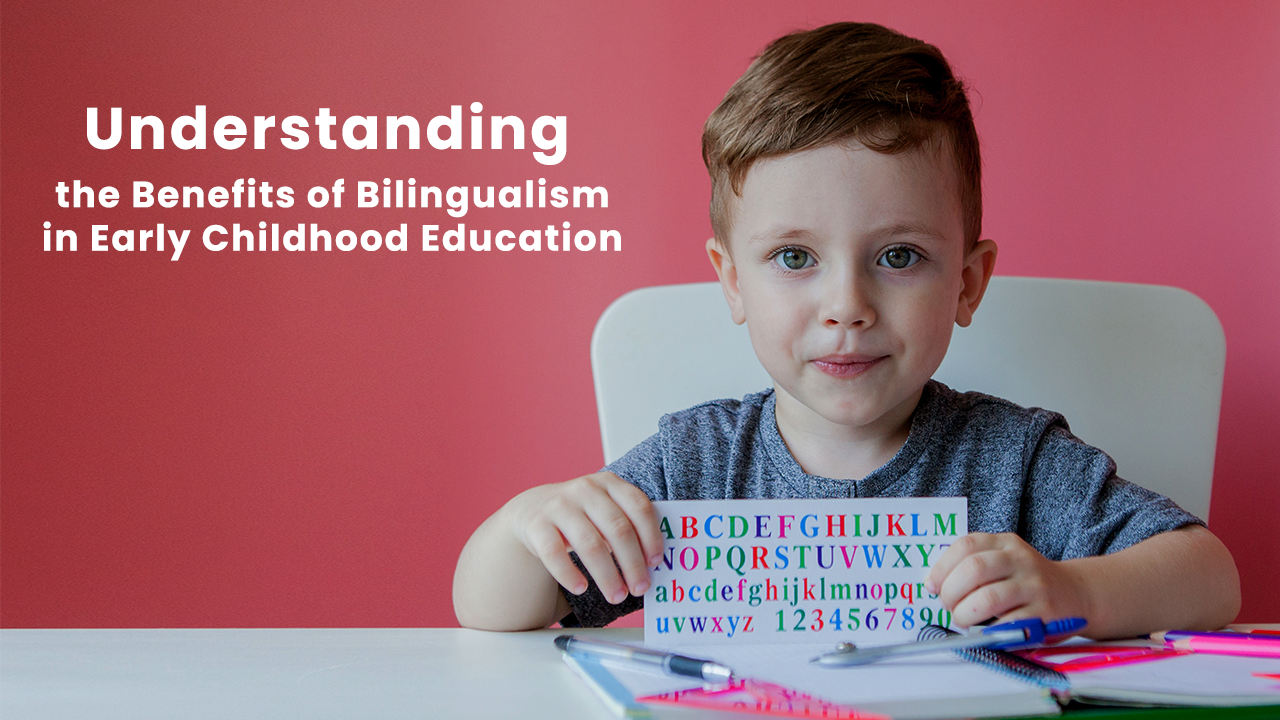
No one denies the benefits of bilingualism in early childhood education. Effective cross-cultural and cross-linguistic communication is a crucial skill in today’s fast-paced global landscape. As caregivers, educators, and mentors, we shoulder the significant task of nurturing young, influential minds that will ultimately shape the trajectory of our world. Integrating bilingualism into early childhood education is at the heart of this developmental journey.
Once regarded as a specialized aptitude, bilingualism now commands widespread recognition for its diverse array of advantages. Beyond the sheer mastery of two languages, it equips children with cognitive acumen, social finesse, and a profound appreciation for different cultures—assets that extend well into adulthood. Within this blog post, we explore early childhood bilingualism, unearthing its profound influence on learning dynamics, neural growth, and the fostering of intercultural competency. Together, we shall navigate through a spectrum of meticulously researched benefits, thus underscoring the criticality of embracing bilingual education to nurture and elevate the potential of young learners holistically.
What is Bilingualism?
At its core, bilingualism refers to the ability to speak and understand two distinct languages proficiently. In the context of early childhood education, bilingualism goes beyond basic language skills, encompassing a deeper level of engagement with both languages. Children exposed to bilingual environments are encouraged to communicate, think, and process information in two languages seamlessly.
The Benefits of Bilingualism in Early Childhood Education
The benefits of bilingualism in early childhood education can not be underestimated. The journey of early childhood education enriched with bilingualism brings forth a treasure trove of advantages that extend far beyond language acquisition alone. Research has highlighted numerous cognitive, social, and cultural benefits that underscore the importance of embracing bilingual education for young learners.
Enhanced Cognitive Skills:
Bilingualism fosters cognitive flexibility, which is the ability to switch between different languages and thought patterns. This cognitive dexterity facilitates smoother communication and enhances problem-solving skills, creative thinking, and adaptability. Bilingual children often exhibit improved multitasking abilities and better executive functions, which involve skills like attention control and task switching.
Heightened Language Proficiency:
Exposure to two languages from an early age gives children a unique language development advantage. Bilingual children tend to exhibit a more advanced vocabulary, better grammar skills, and an ear for nuances in communication. Their heightened language awareness translates to stronger reading, writing, and communication skills in both languages.
Cultural Sensitivity and Empathy:
Bilingualism opens doors to different cultures, allowing children to appreciate diverse perspectives and practices. Through exposure to multiple languages, children gain an understanding of cultural nuances and develop empathy toward people from different linguistic backgrounds. This cultural sensitivity nurtures open-mindedness and a global outlook from an early age. Read More About Diversity and Inclusion in Daycare Centers
Enhanced Problem-Solving and Critical Thinking:
Bilingual individuals often excel in problem-solving tasks because they can approach challenges from multiple linguistic angles. This cognitive advantage extends to critical thinking, where bilingual children tend to consider various viewpoints and analyze situations more comprehensively.
Neurological Benefits:
Bilingualism has been shown to have positive effects on brain structure and function. The constant negotiation between languages stimulates the brain, leading to increased gray matter density and improved neural connectivity. This, in turn, contributes to better memory, attention control, and overall cognitive agility.
Improved Social Skills:
Bilingual children often exhibit stronger communication skills and adaptability in social settings. They are more comfortable interacting with a diverse range of peers, fostering inclusivity and effective communication. Bilingualism nurtures social confidence, enabling children to engage effortlessly in multicultural environments.
Early Learning Advantage:
Bilingualism has been linked to enhanced academic performance. The cognitive skills developed through language management and problem-solving can contribute to improved performance in subjects beyond language, such as math and science.
Lifelong Benefits:
The advantages of bilingualism extend well into adulthood. Bilingual individuals have a broader range of job opportunities, improved cognitive resilience as they age, and a unique ability to connect with people from different linguistic backgrounds.
Most Effective Strategies to Foster Bilingualism in Daycare Centers
Creating an environment that cultivates bilingualism in daycare centers requires a thoughtful and holistic approach. Here are some of the most effective strategies to nurture bilingualism among young learners:
Immersive Language Exposure:
Surround children with both languages in various contexts. Teachers and caregivers should communicate naturally in each language, exposing children to diverse vocabulary, sentence structures, and expressions.
Consistency is key.
Establish clear routines where specific languages are spoken at designated times. This consistency helps children associate particular activities or settings with specific languages, aiding in their language differentiation.
Language-Rich Environment:
Decorate classrooms with labels, signs, and visual aids in both languages. Storybooks, posters, and educational materials should be available in both languages, promoting language exploration and learning.
Bilingual Staff:
Employ teachers and caregivers who are fluent in the target languages. This ensures authentic language use and provides children with role models to emulate.
Themed Language Days:
Designate days of the week for each language, engaging children in activities centered around that language. This can include storytelling, arts and crafts, and games that emphasize the chosen language.
Multilingual Playgroups:
Organize playgroups or peer activities where children interact using both languages. Collaborative play encourages language exchange and builds social connections.
Cultural Celebrations:
Incorporate cultural celebrations and events related to the languages being taught. This gives children a deeper understanding of the cultural context surrounding the languages.
Language-Integrated Curriculum:
Integrate bilingualism into the curriculum by using both languages to teach various subjects. This approach helps children associate each language with diverse knowledge areas.
Interactive Technology:
Utilize age-appropriate language learning apps and interactive technology to engage children in language-focused activities. These tools can reinforce vocabulary and language skills in an engaging manner.
Parental Involvement:
Keep parents informed about the bilingual approach and encourage them to use the target languages at home. Provide resources and strategies for parents to reinforce language learning outside of daycare.
Field Trips and Guest Speakers:
Arrange field trips or invite guest speakers who can interact with children using the target languages. Real-world exposure enhances language comprehension and contextual understanding.
Language Games and Challenges:
Incorporate language-based games, puzzles, and challenges into daily activities. This gamified approach keeps children motivated and excited about learning both languages.
Positive Reinforcement:
Celebrate language milestones and achievements to boost children’s confidence and motivation. Positive reinforcement creates a positive association with language learning.
Language Diversity Embrace:
Emphasize the value of language diversity and the importance of learning multiple languages in today’s global world. Instill a sense of pride in being bilingual.
Flexibility and Patience:
Recognize that children may progress in their language acquisition at different rates. Be patient and adjust strategies as needed to cater to individual learning styles.
By implementing a combination of these strategies, daycare centers can create an immersive and enriching bilingual environment that empowers children to become confident and proficient speakers of multiple languages.